White Ashe Arm Chair
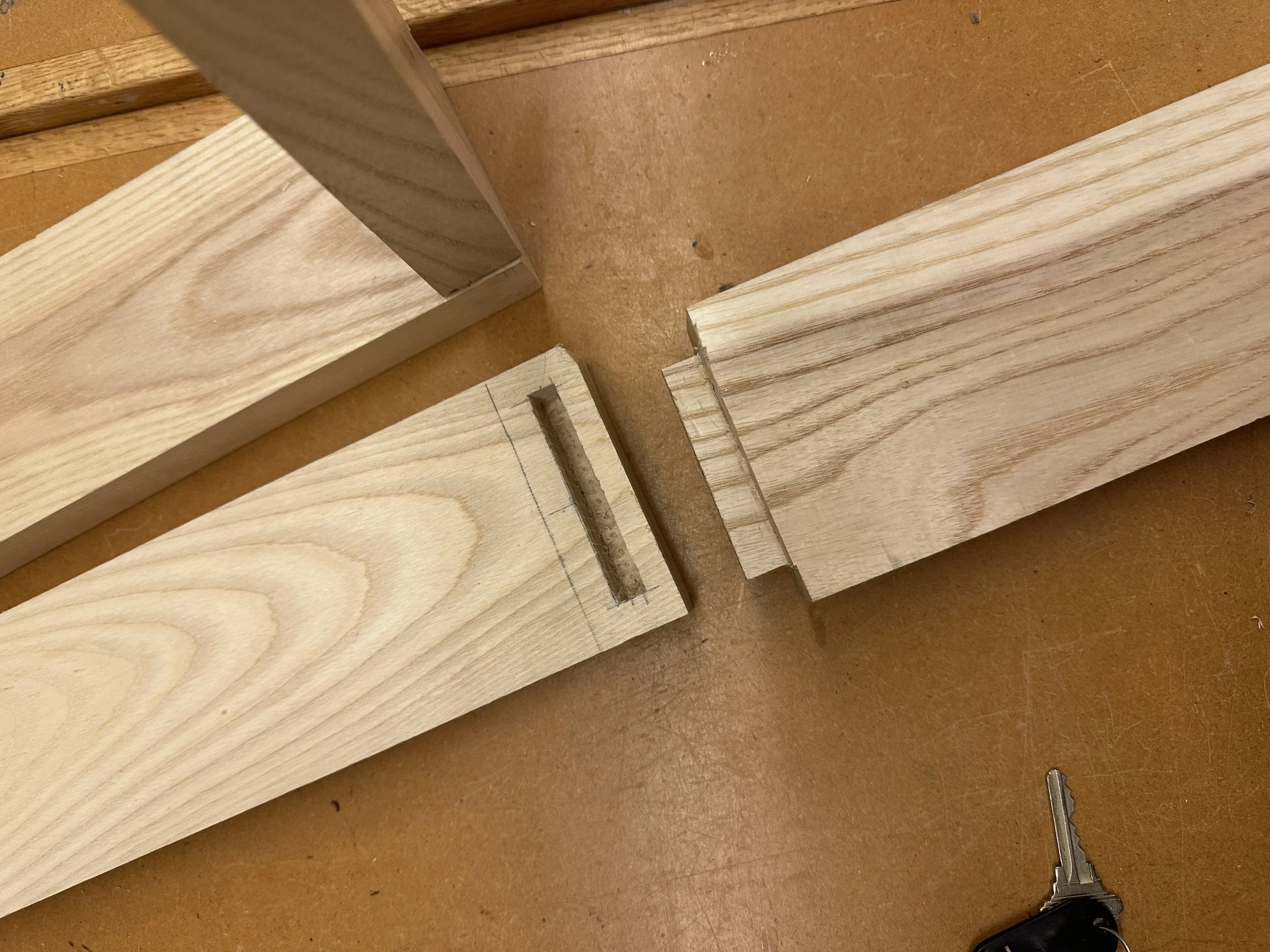
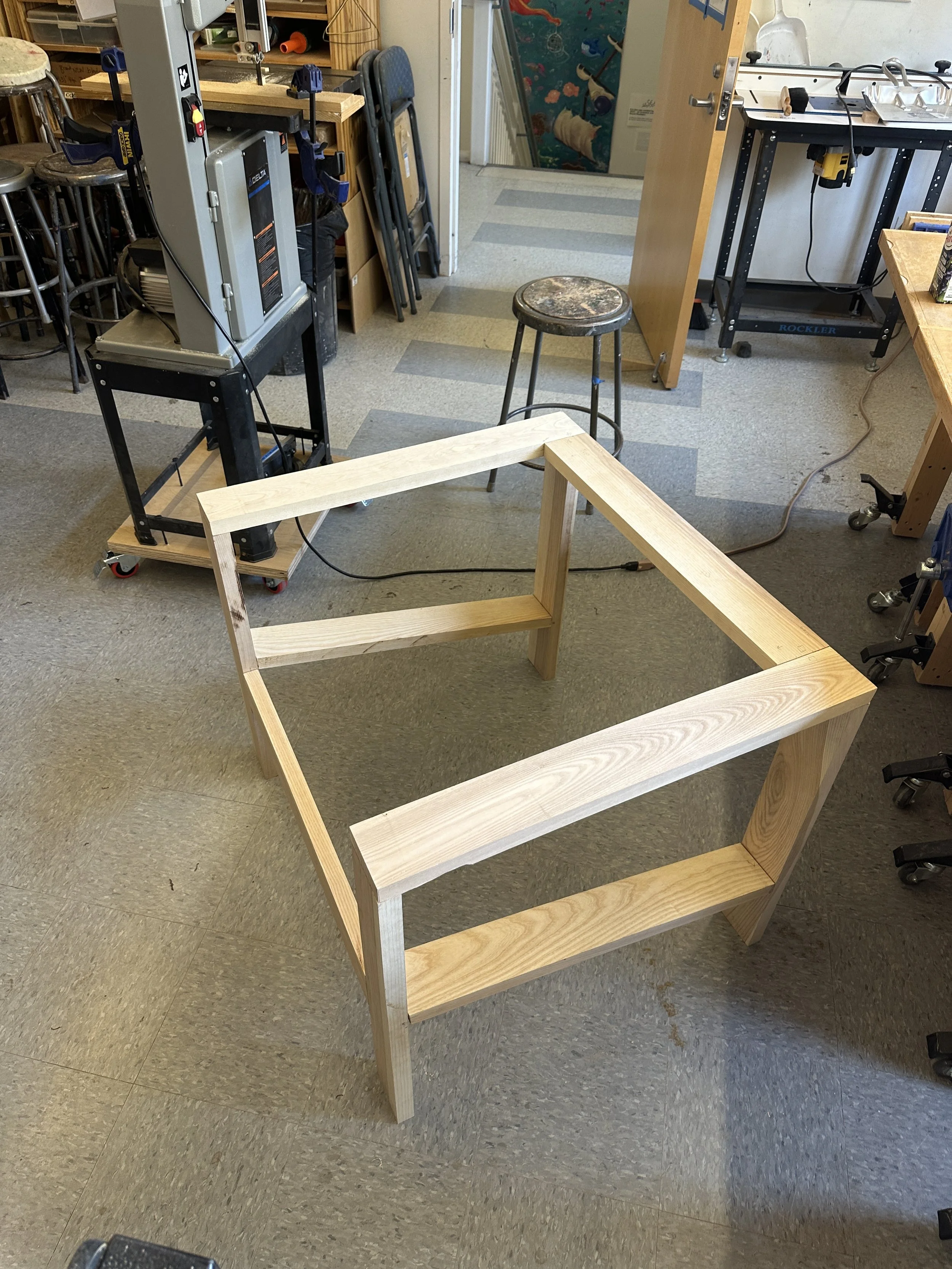
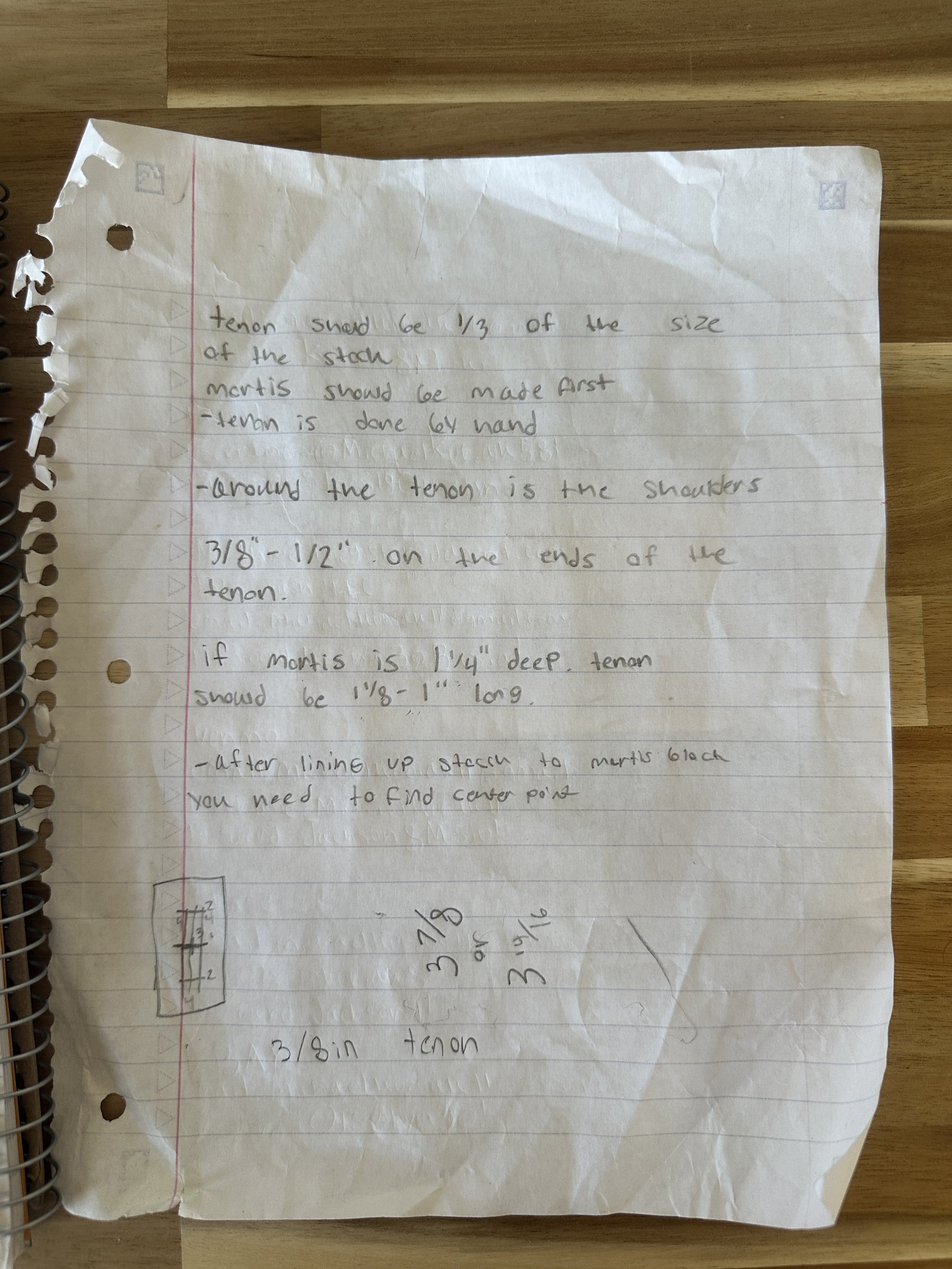
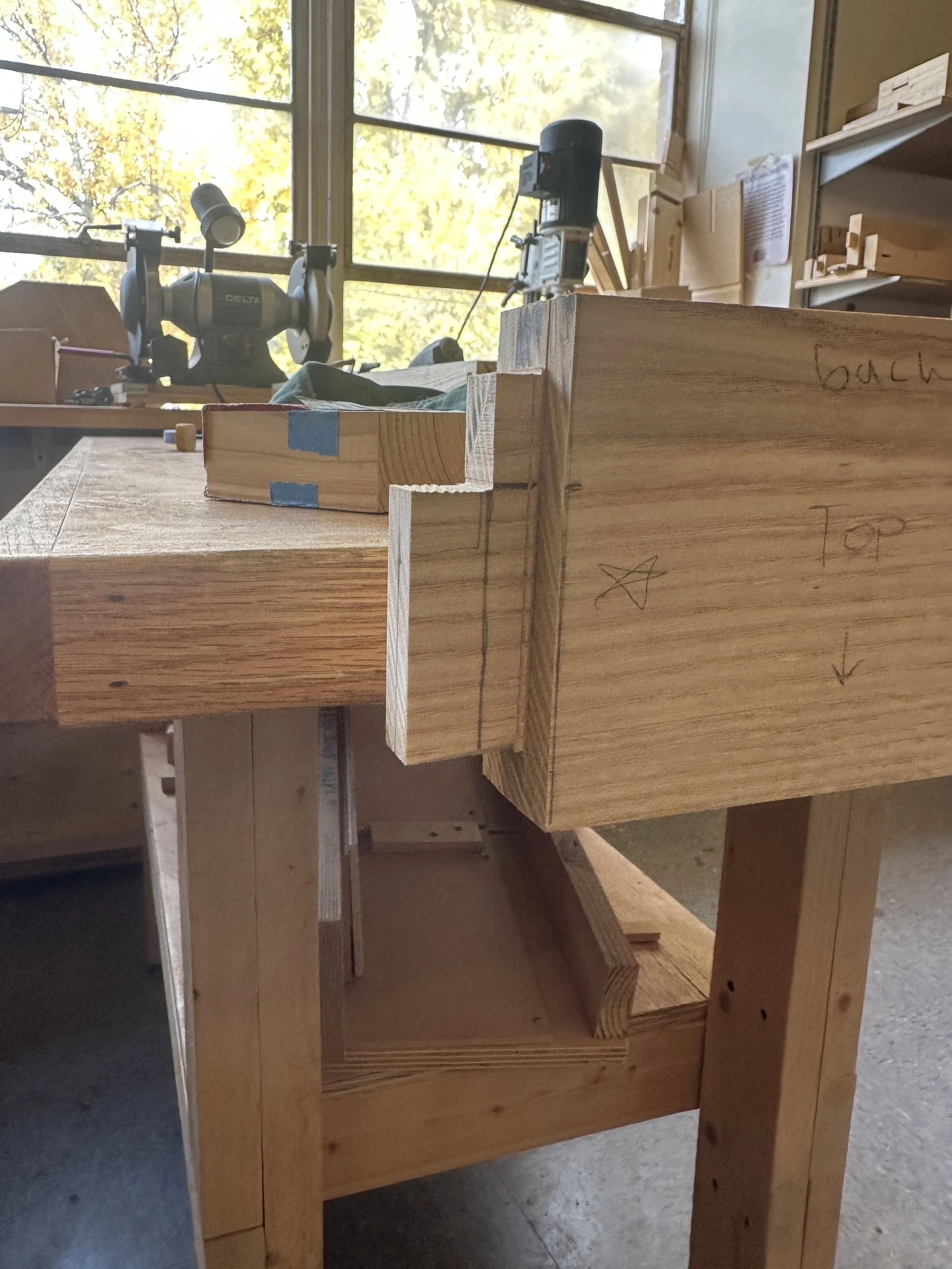
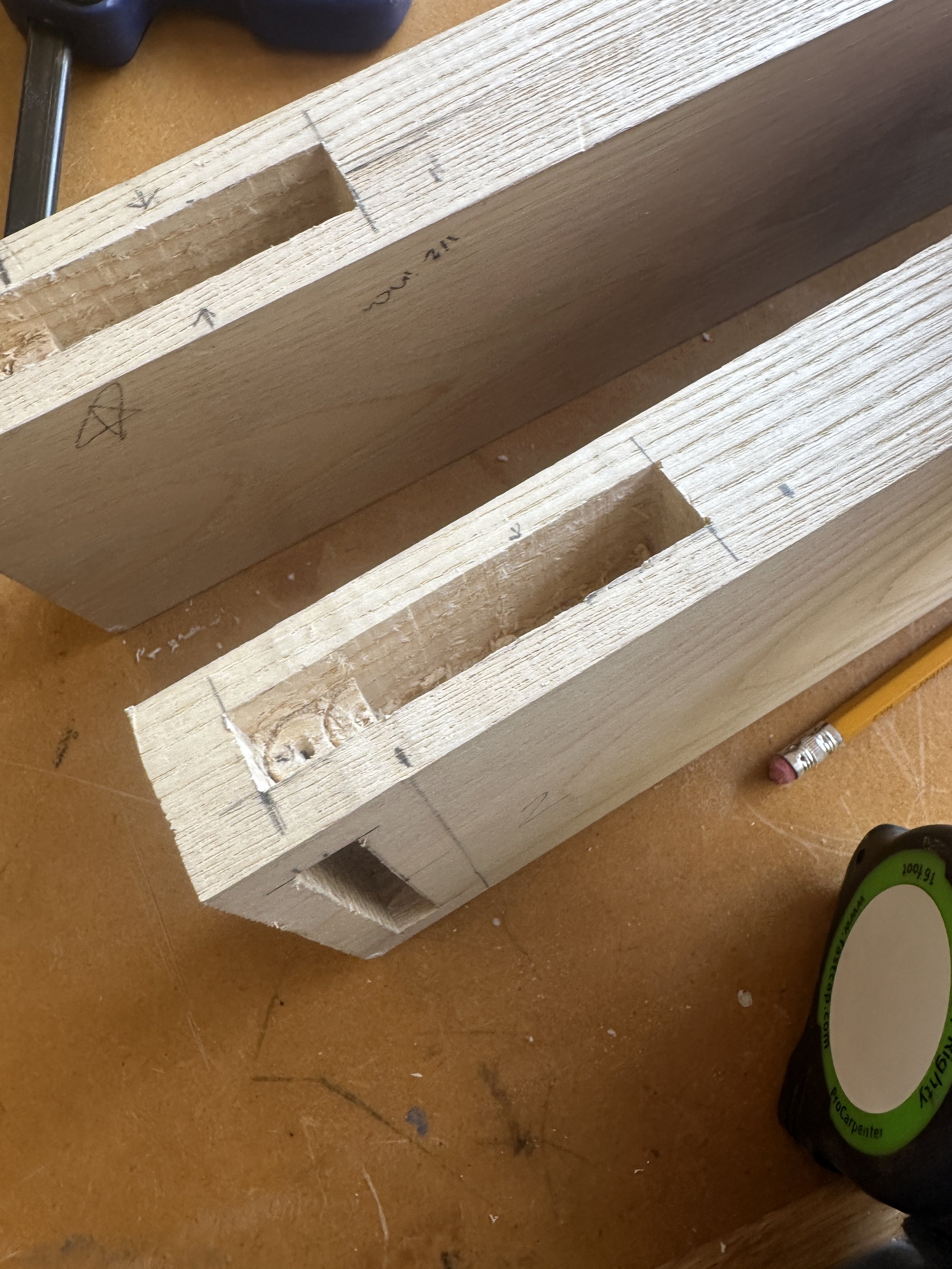
mortis and tenon joints
Background
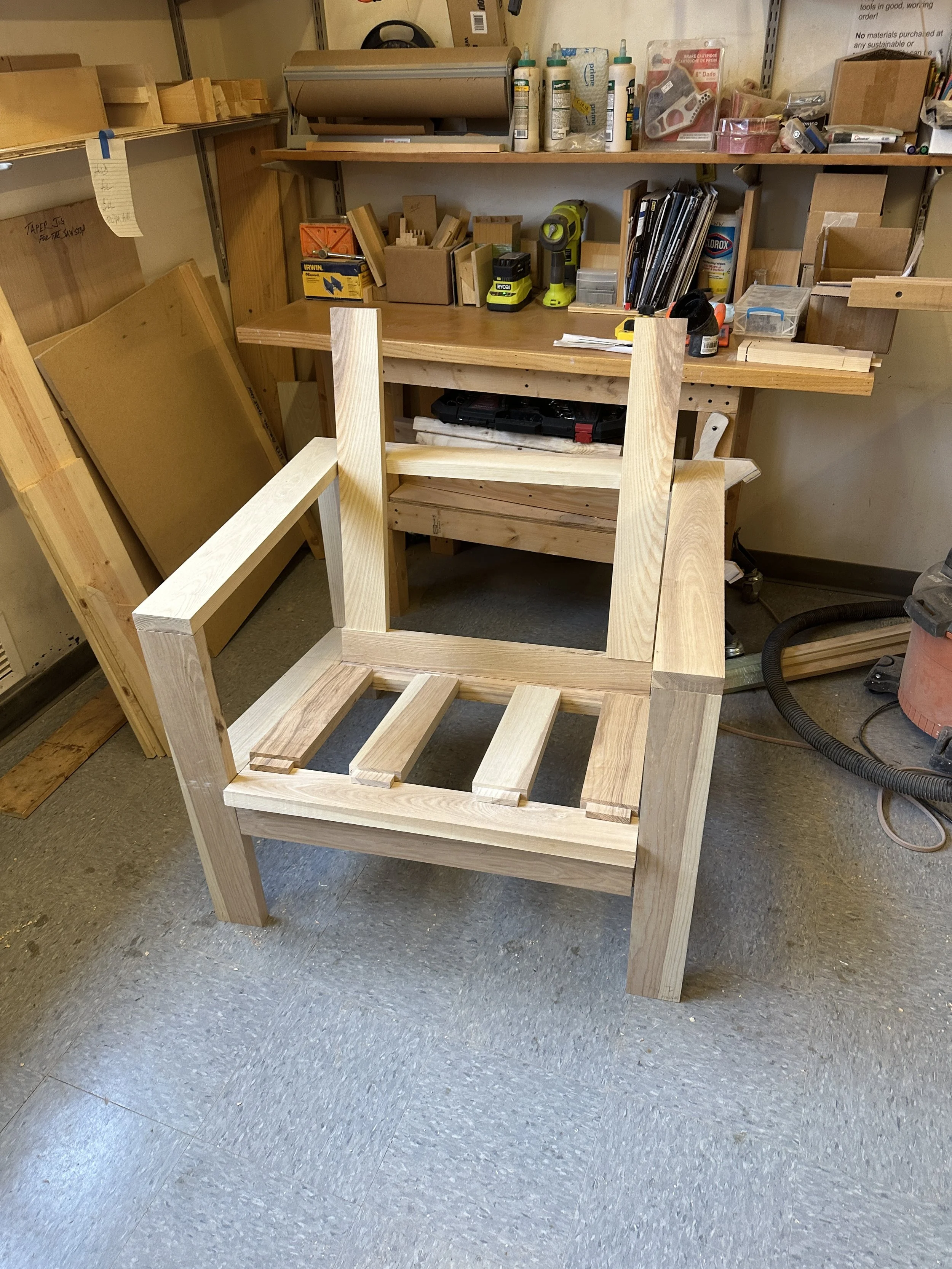
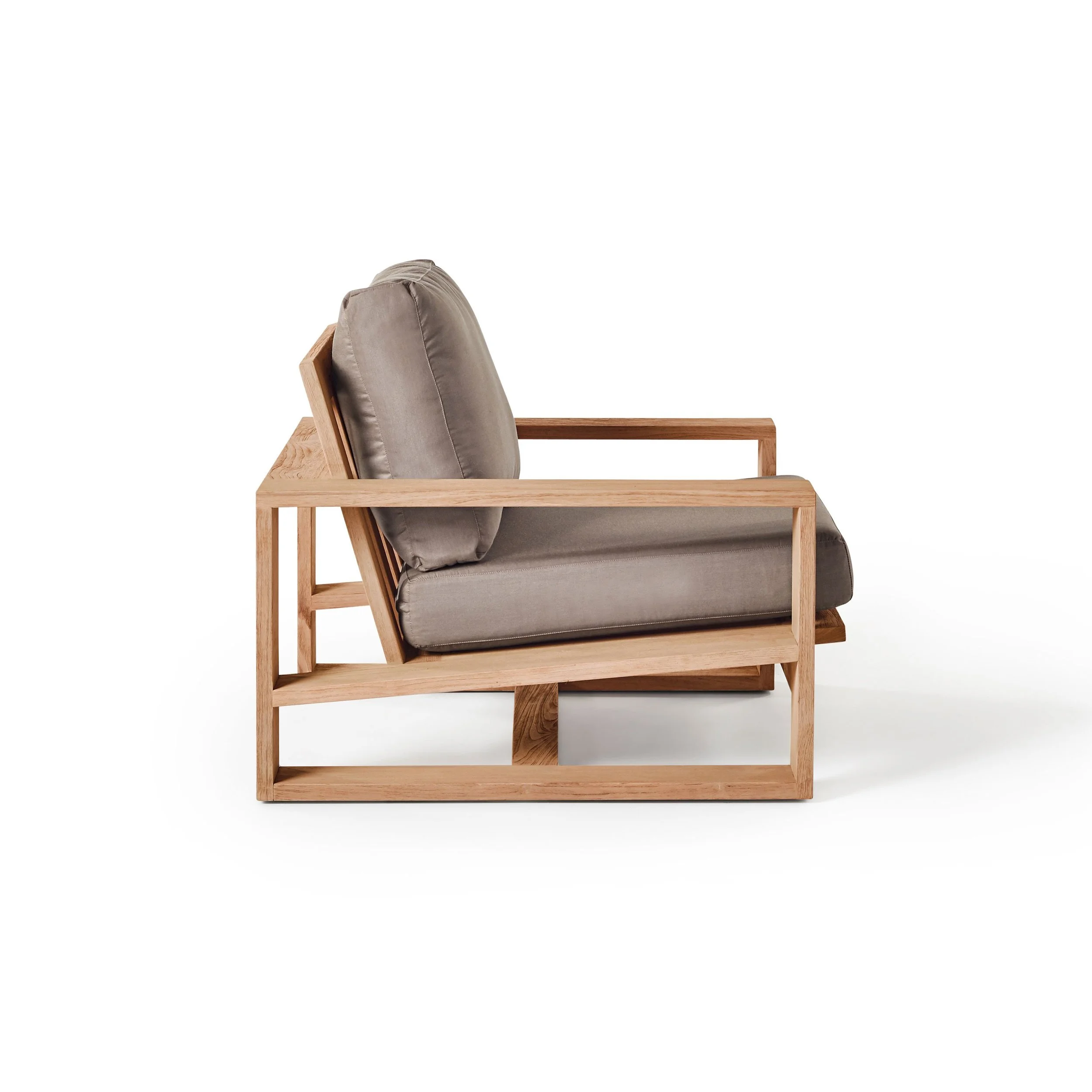
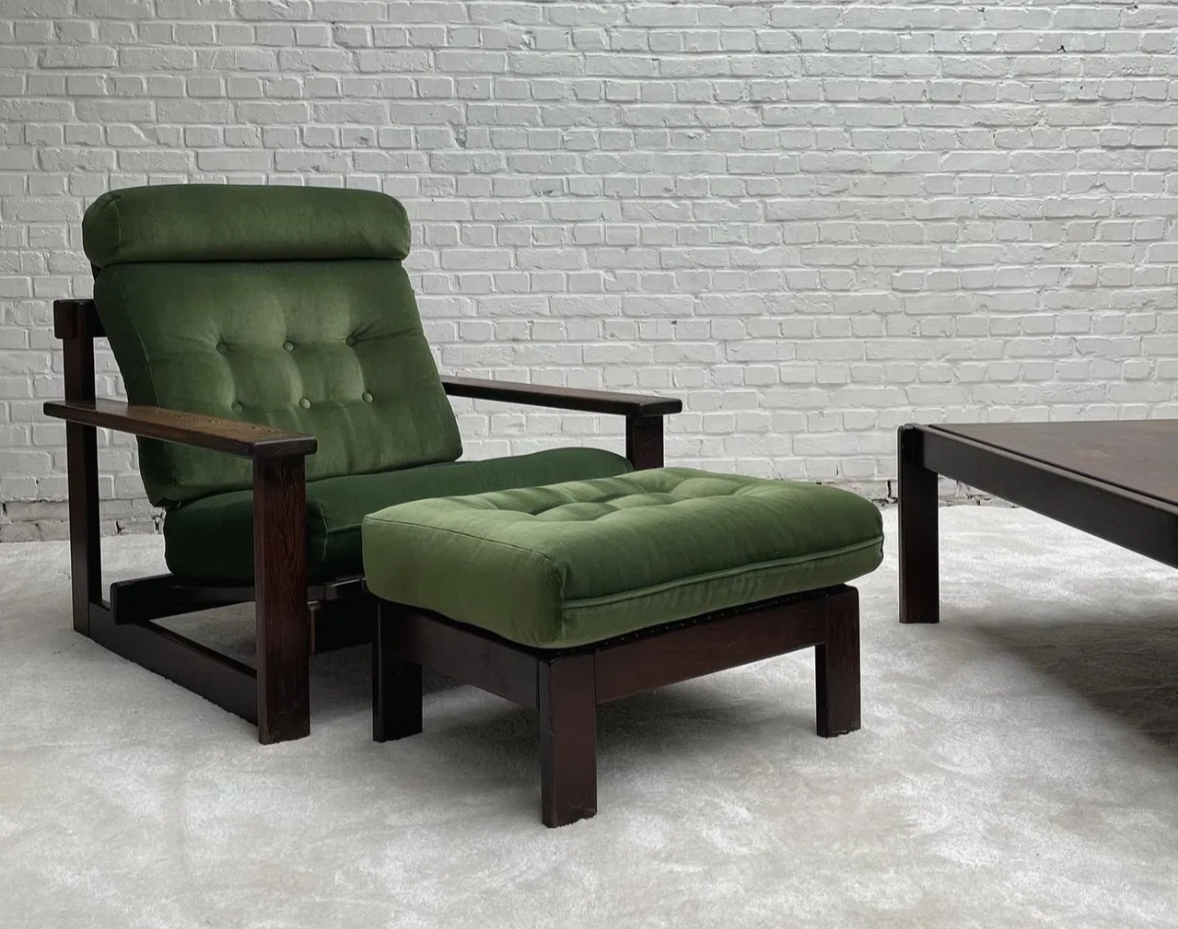
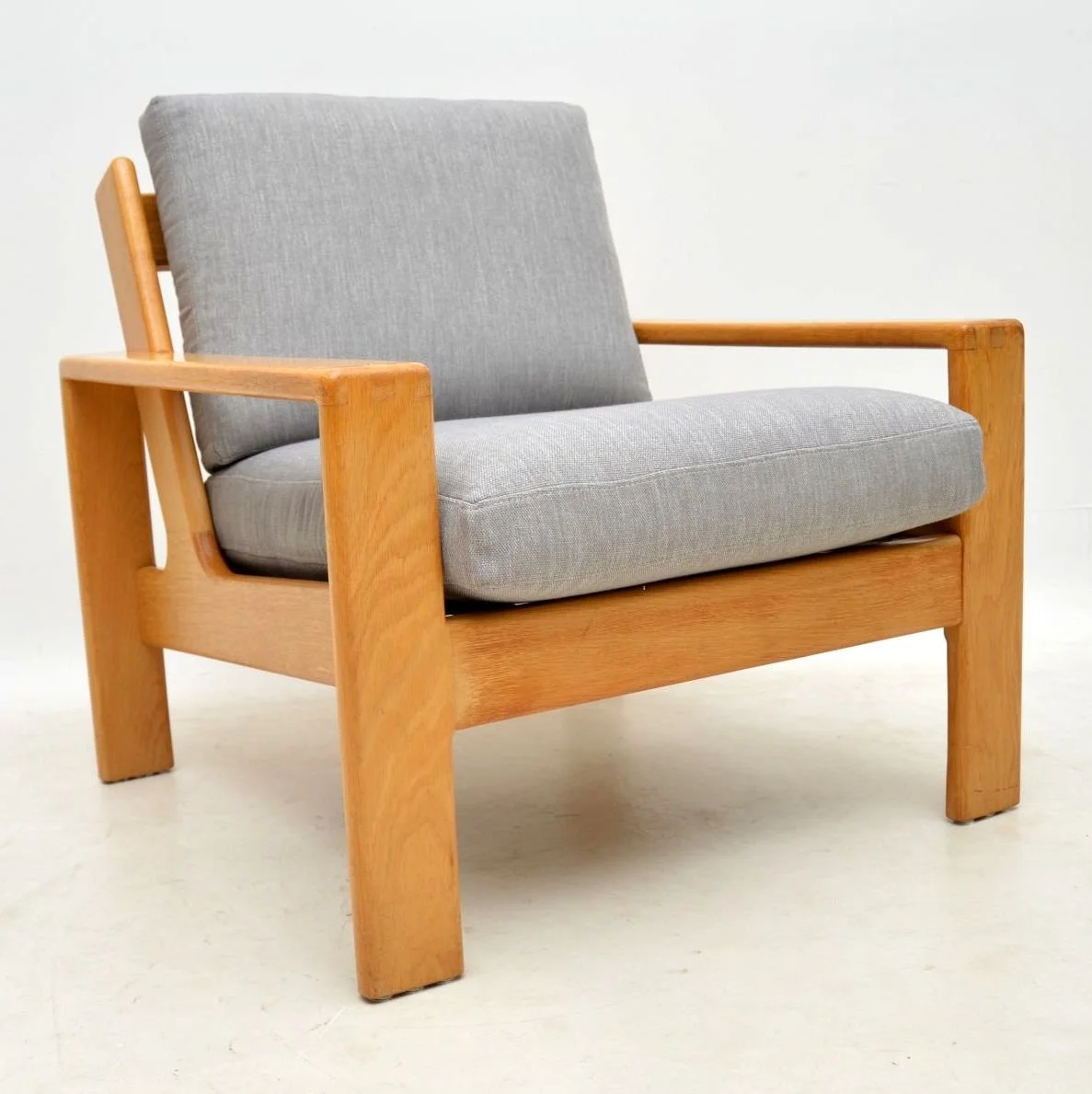
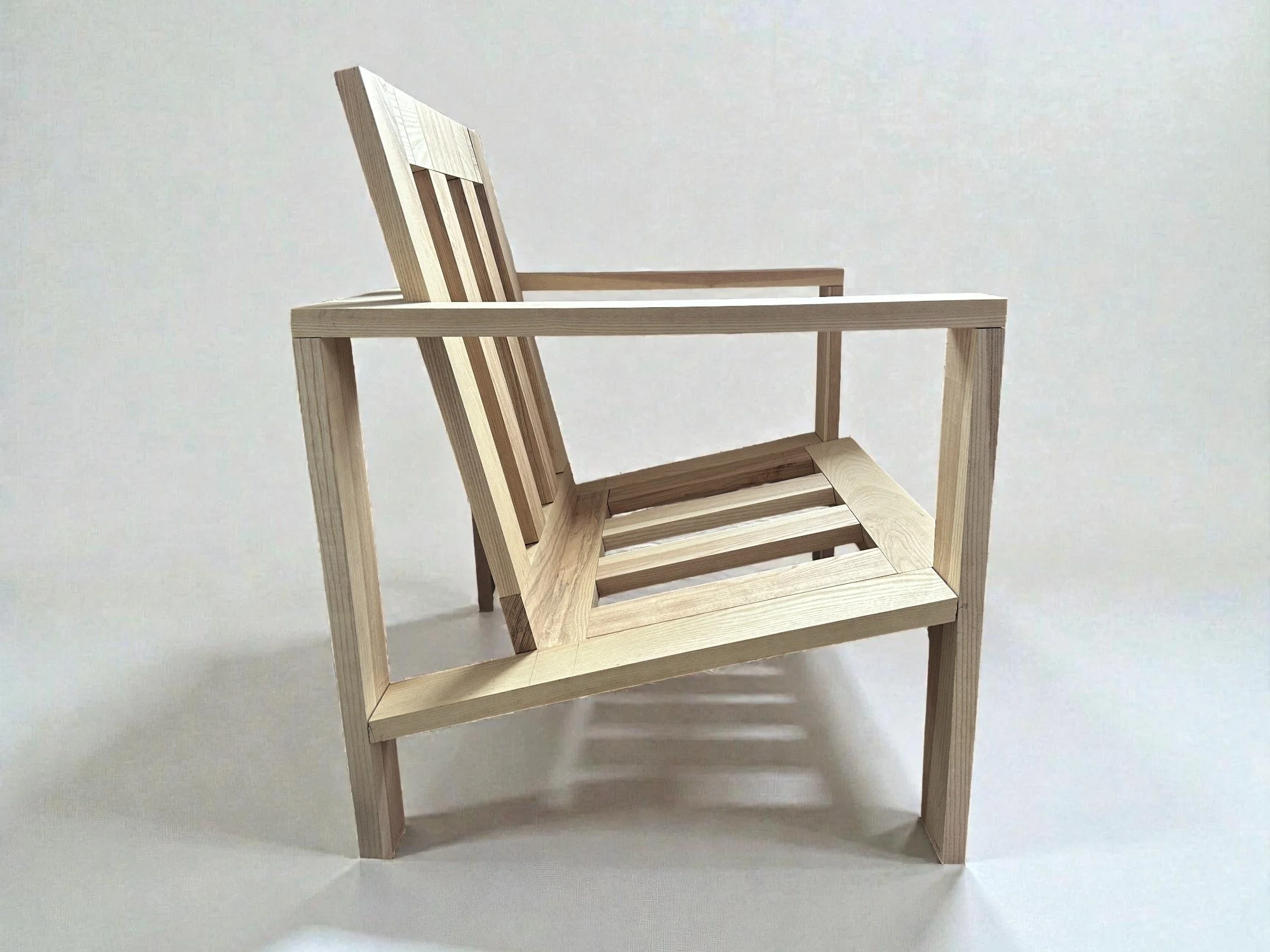
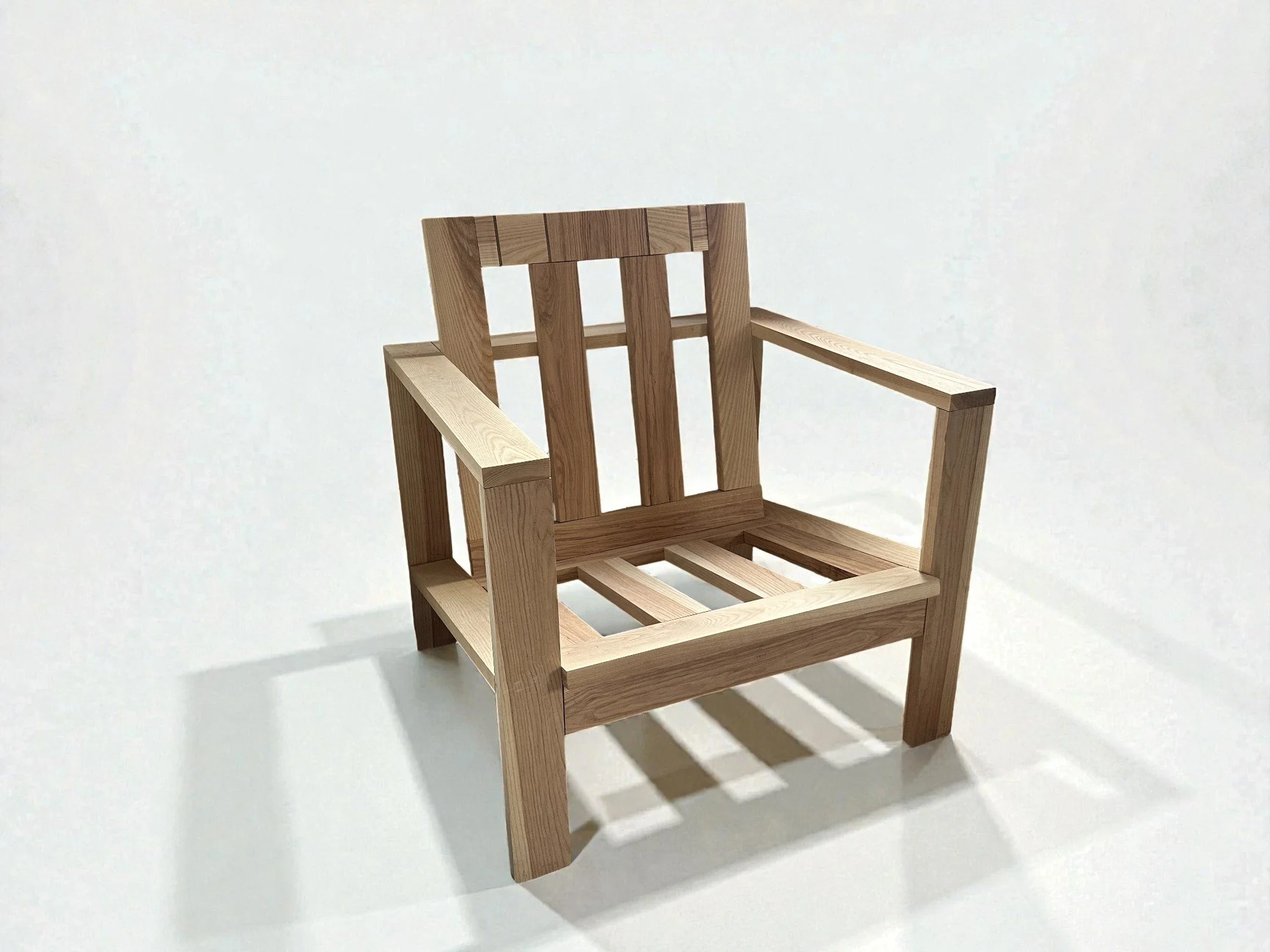
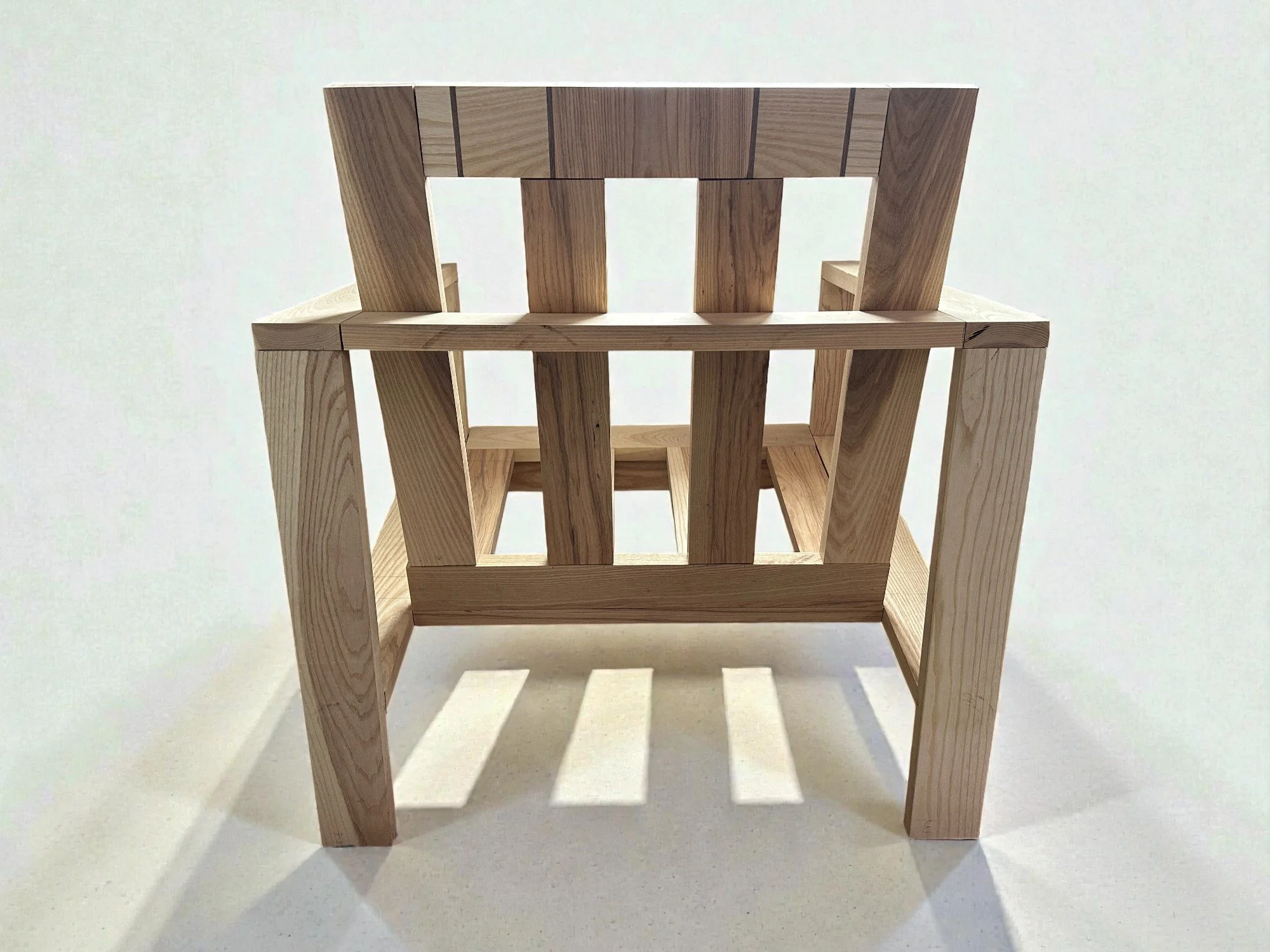
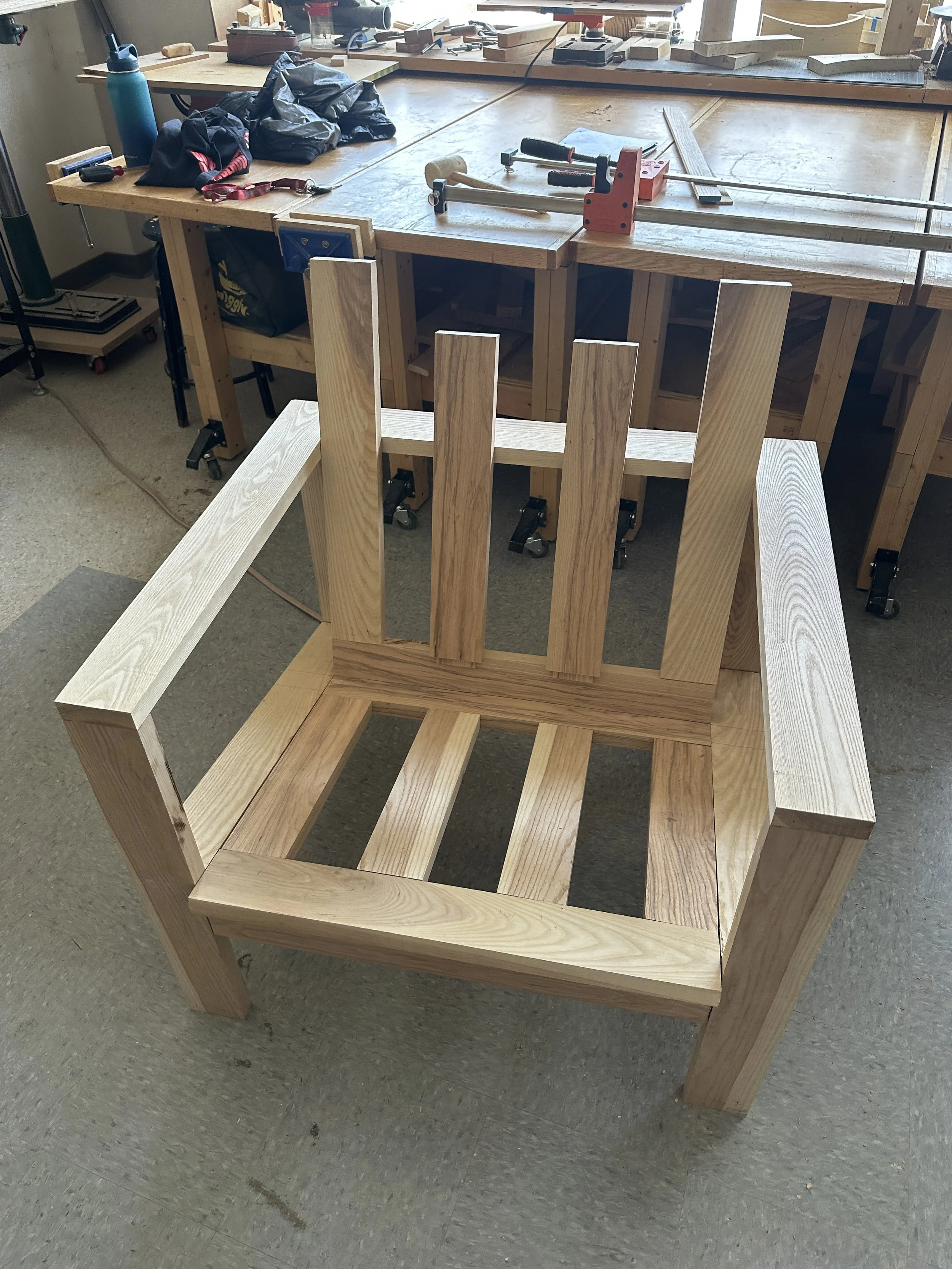
This project is a large, solid-wood armchair constructed entirely from white ash, chosen for its strength, flexibility, and expressive grain. The chair was designed and built as my first furniture and woodworking project, developed during a course at the Evanston Art Center in Illinois. The design was inspired by a set of armchairs in my grandmother’s home, which sparked an interest in creating a piece with both emotional familiarity and lasting presence. Visually, the chair blends the mass and honesty of brutalist construction with the proportions and warmth of mid-century modern furniture, resulting in a piece that feels grounded, durable, and intentional.
Concept Development, Goals & Constraints
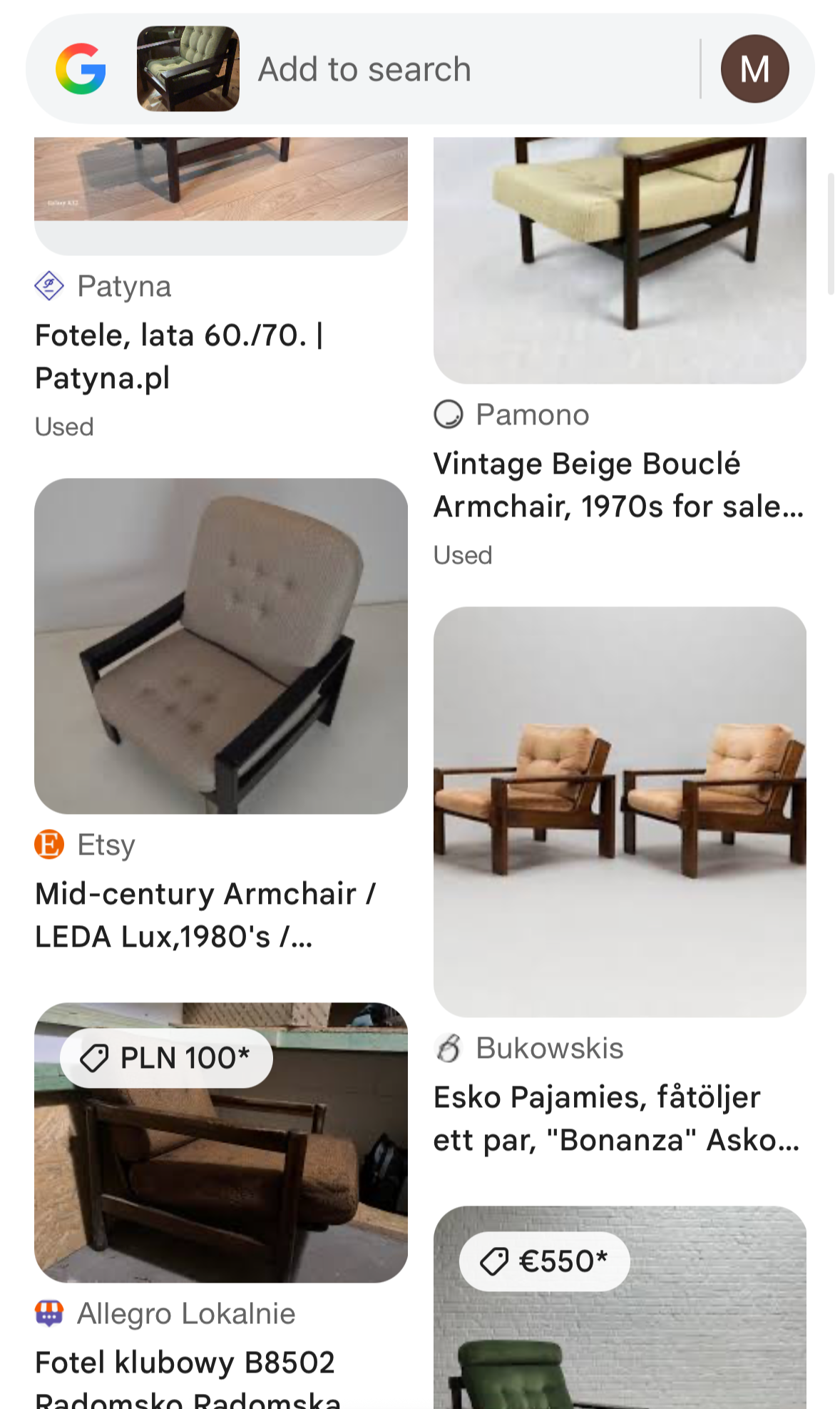
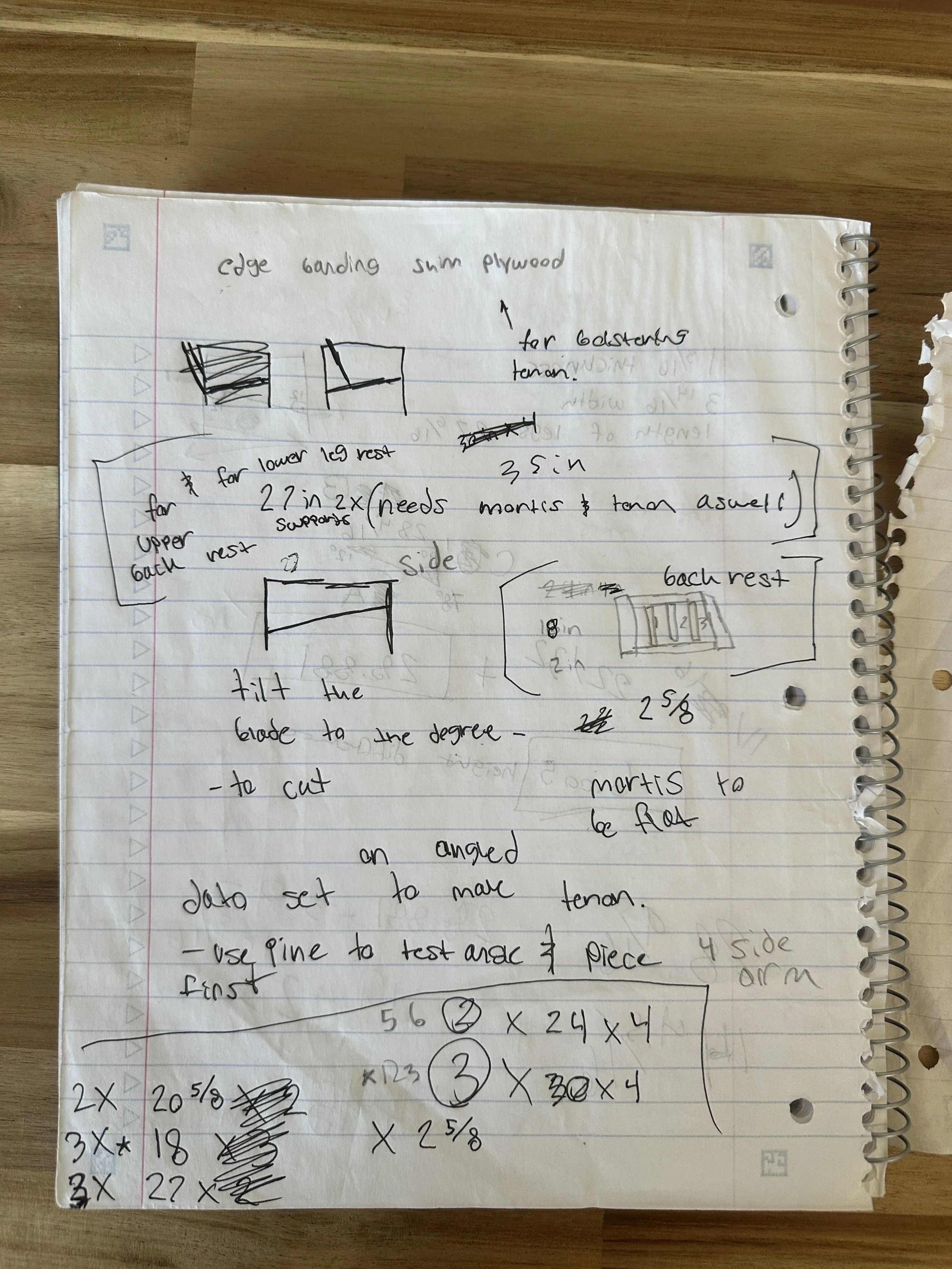
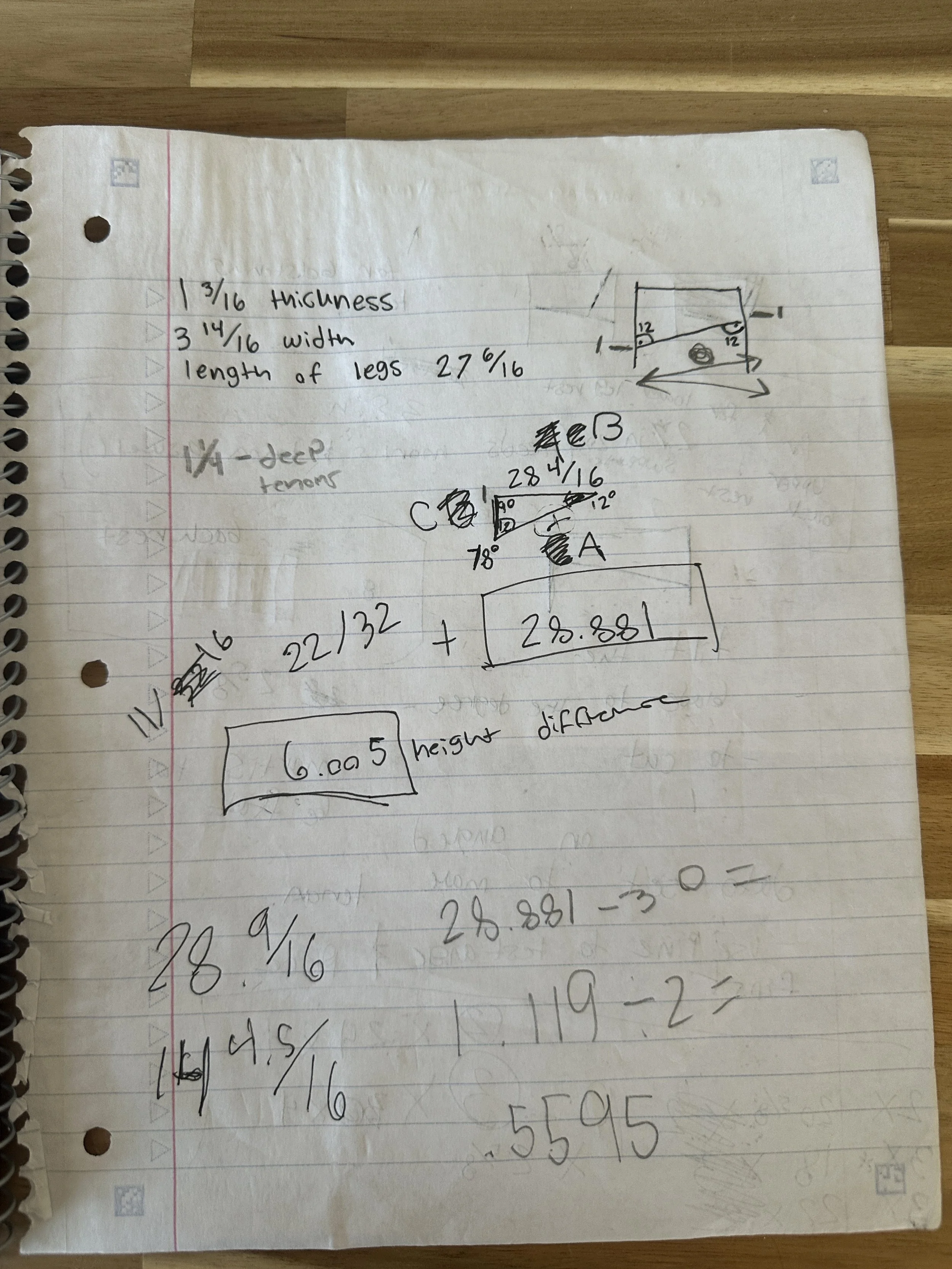
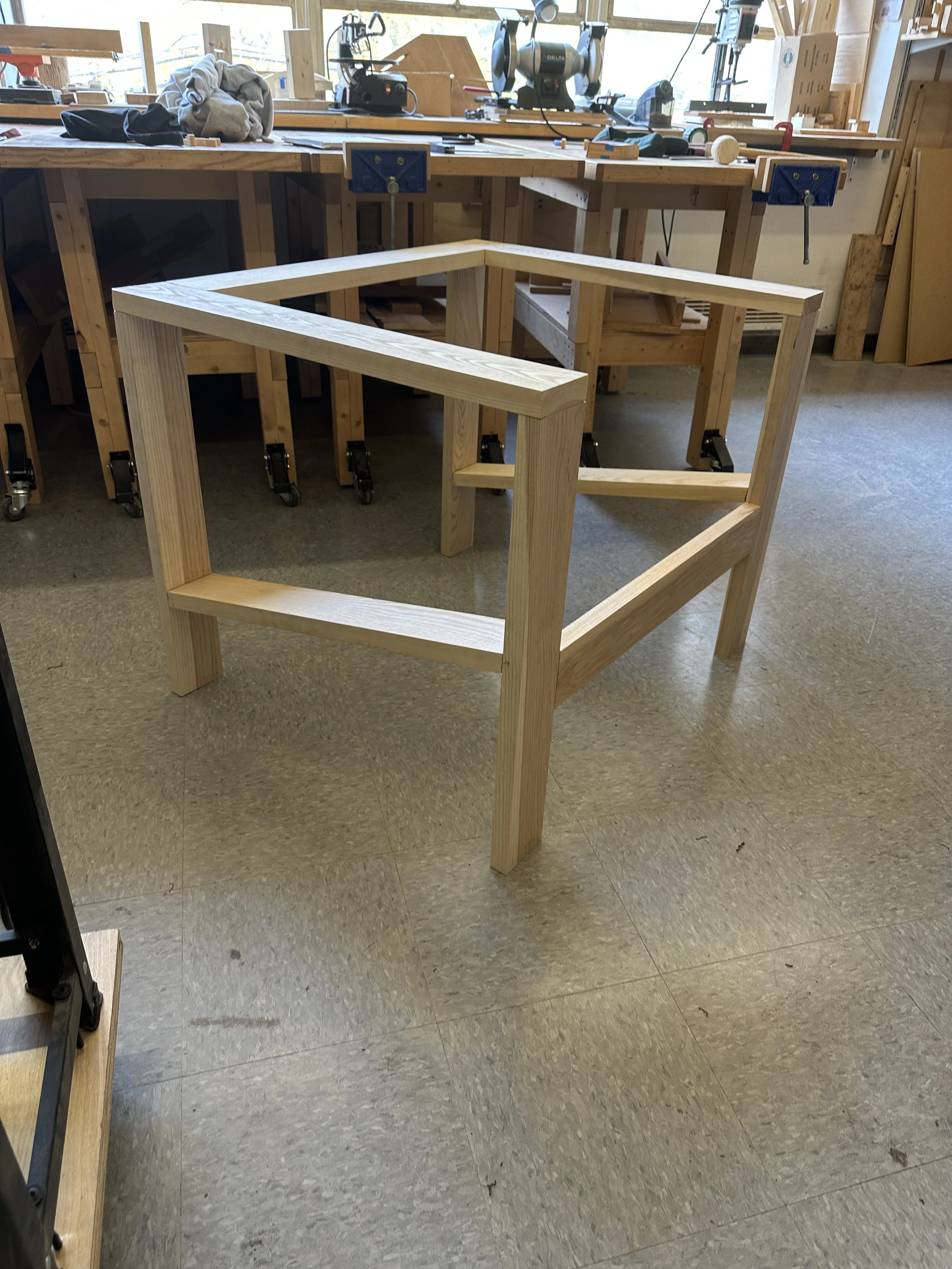
The design of the chair developed alongside the making process rather than being fully resolved from the beginning. Early on, I focused on understanding basic seating proportions by measuring existing armchairs found online and in person. Seat height, depth, and back angle were tested at full scale to determine what felt comfortable rather than relying solely on drawings or reference dimensions.
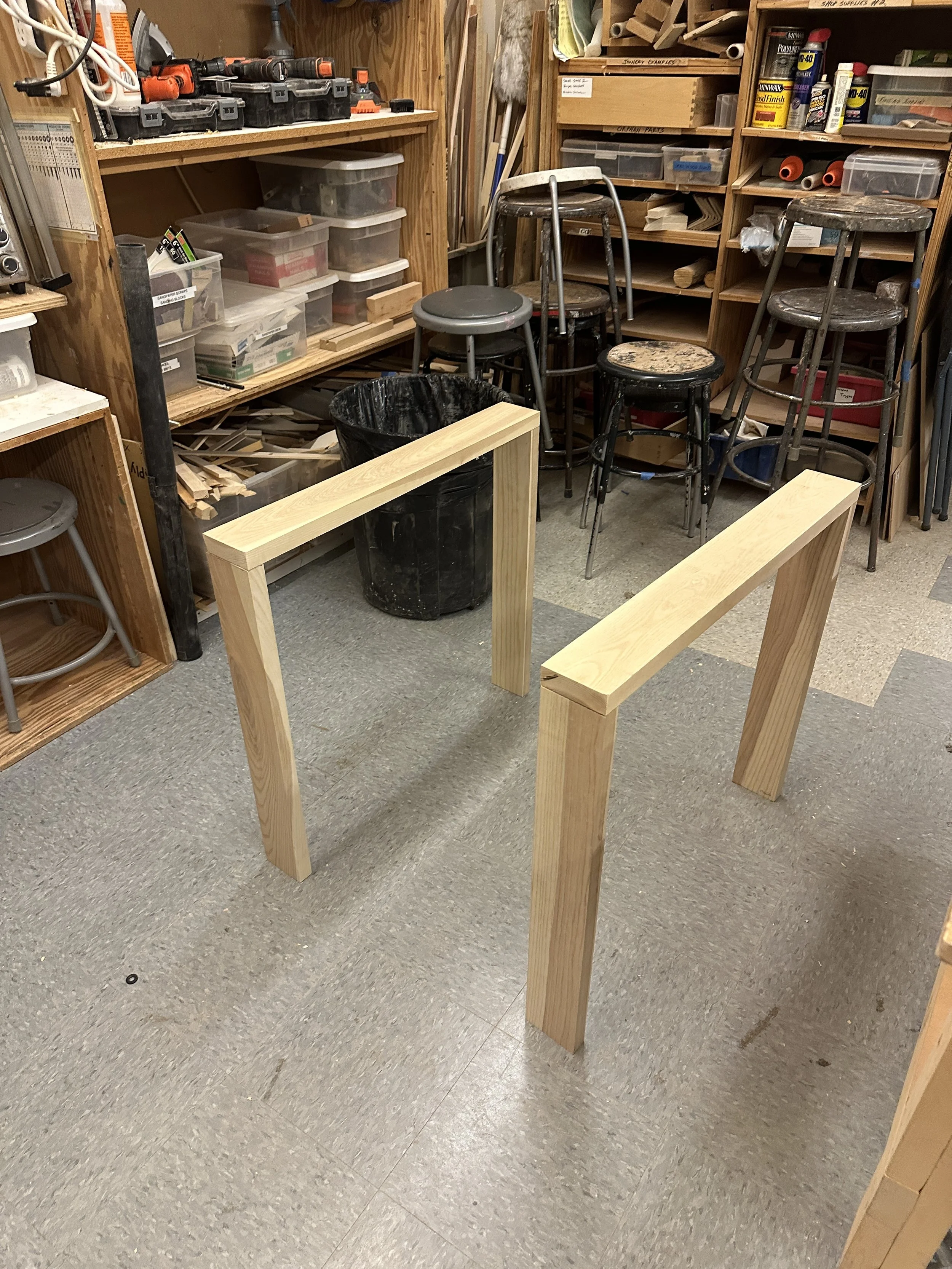
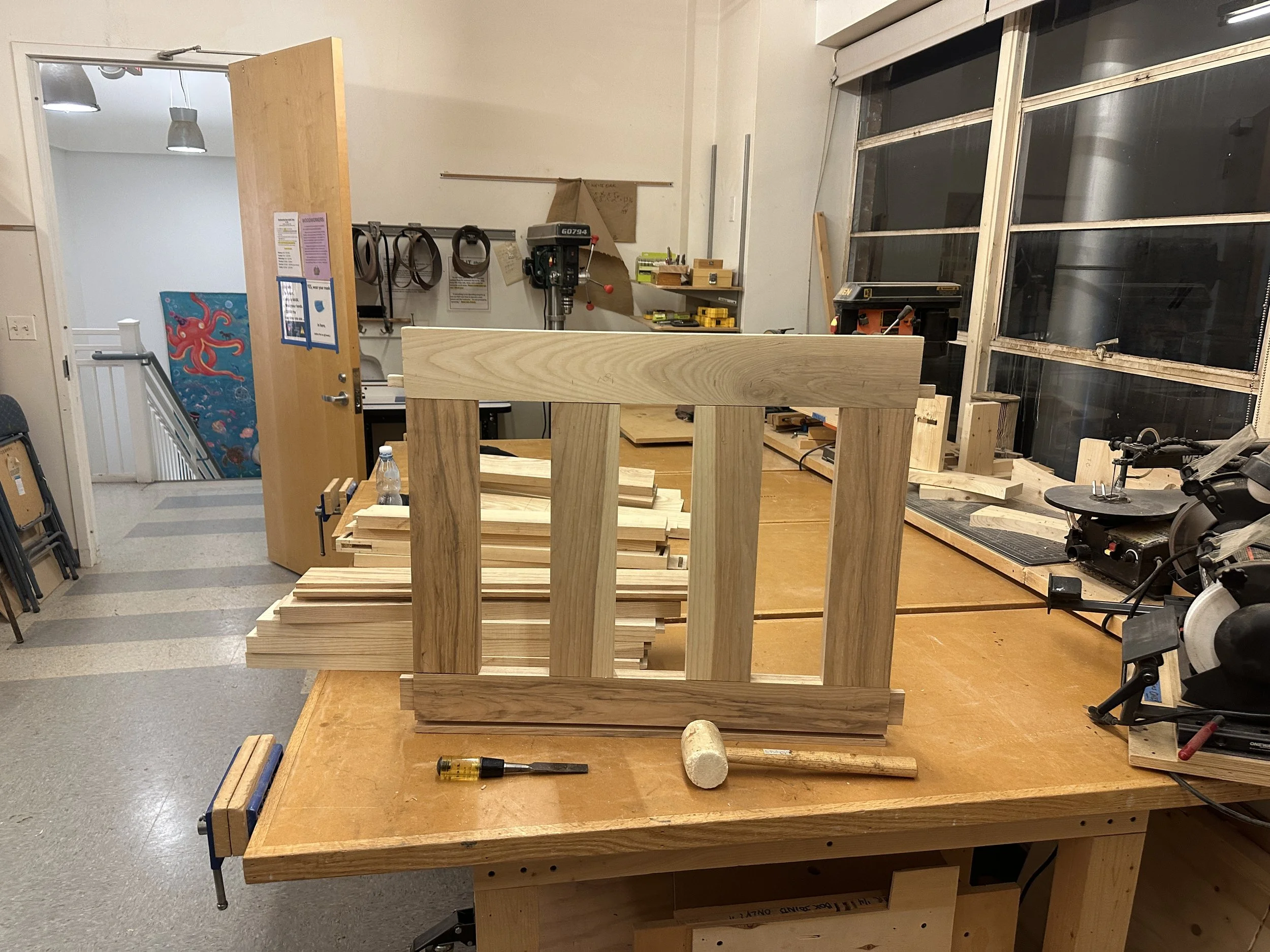
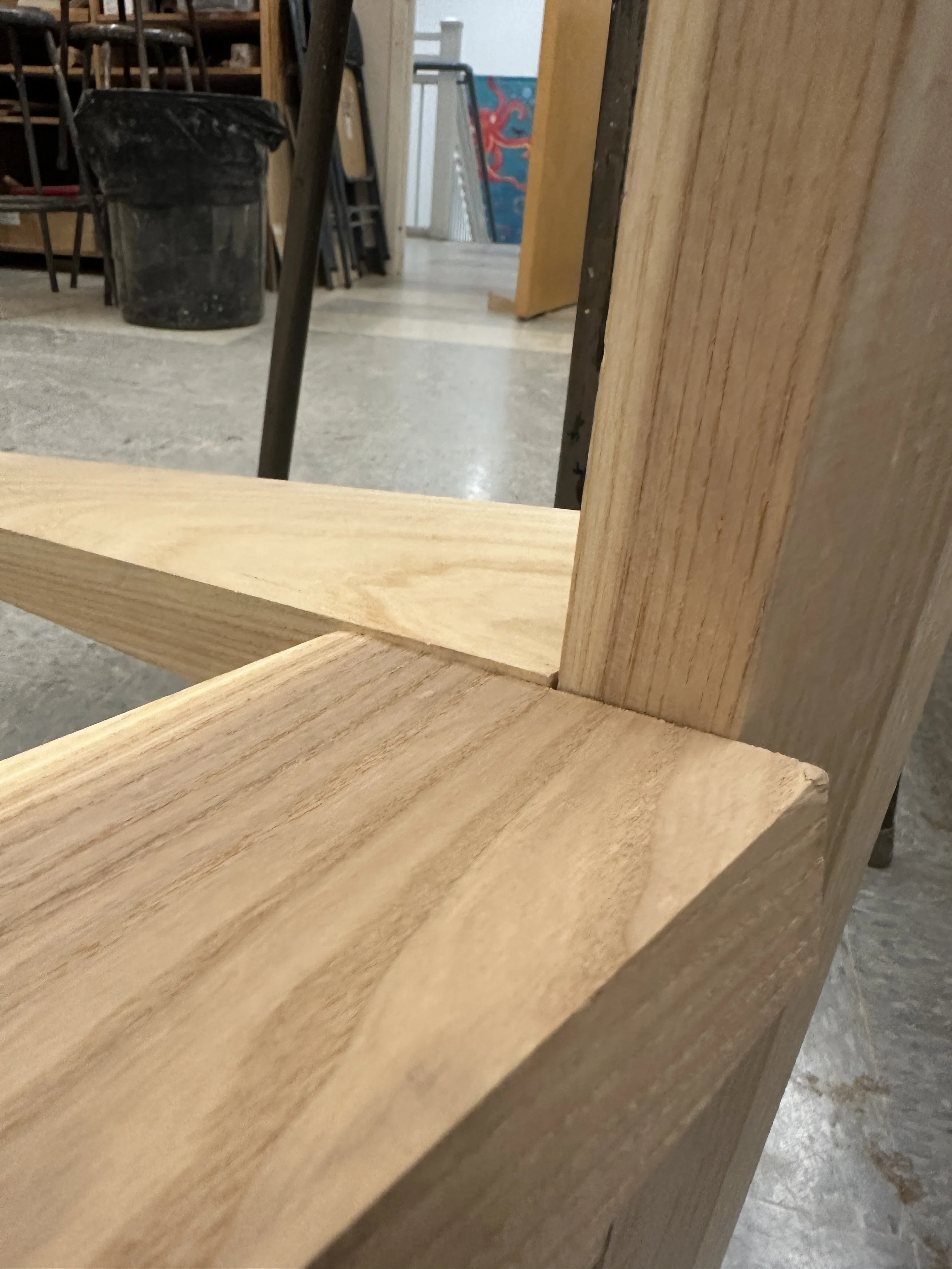
One of the main goals of the project was to rely entirely on traditional woodworking joints to hold the chair together, avoiding the use of metal fasteners. This decision came from an interest in learning fundamental joinery and keeping the construction visually clean and honest. Mortise and tenon joints became the primary method of assembly, which influenced both the structure and the overall form of the chair.
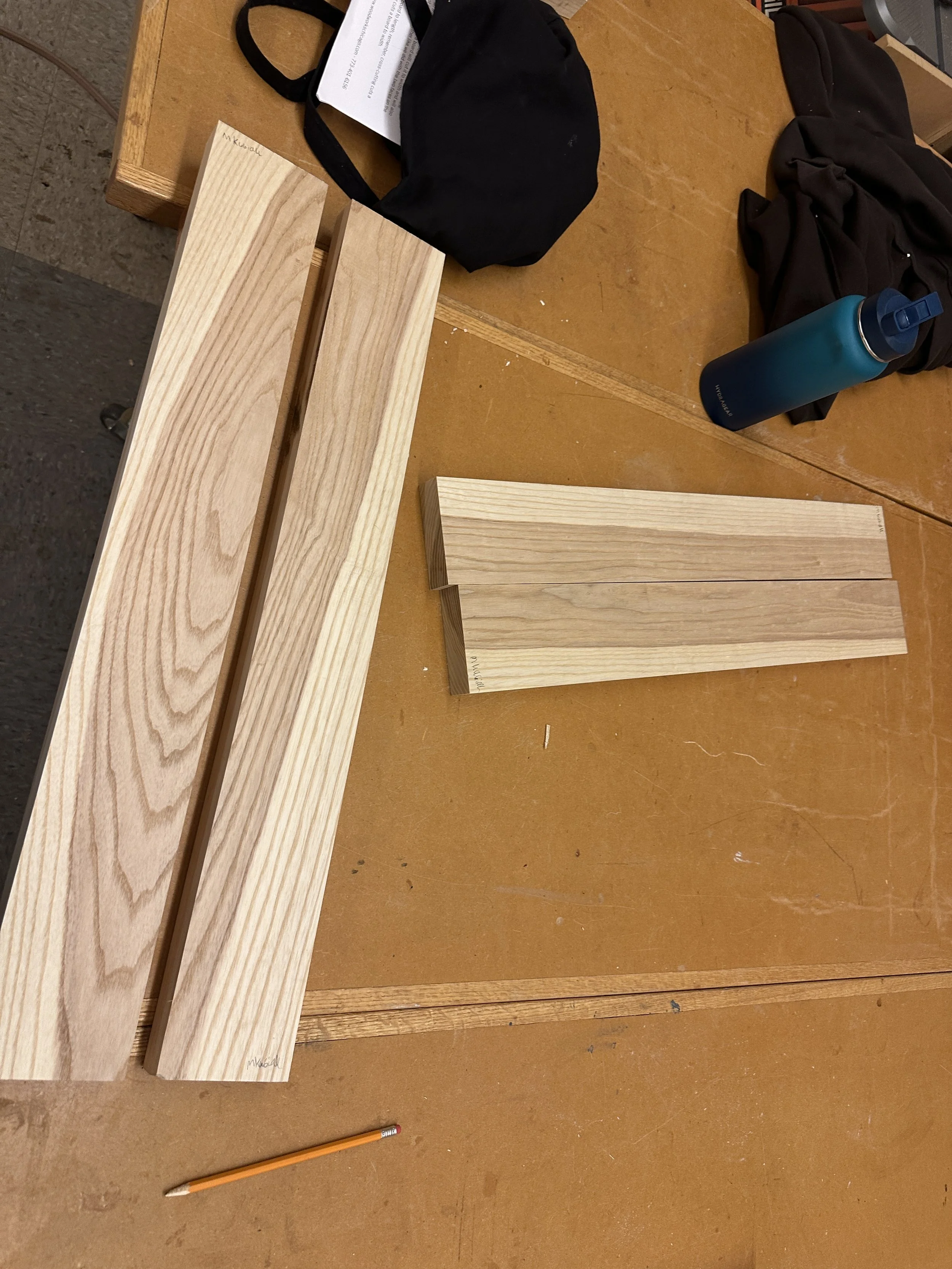
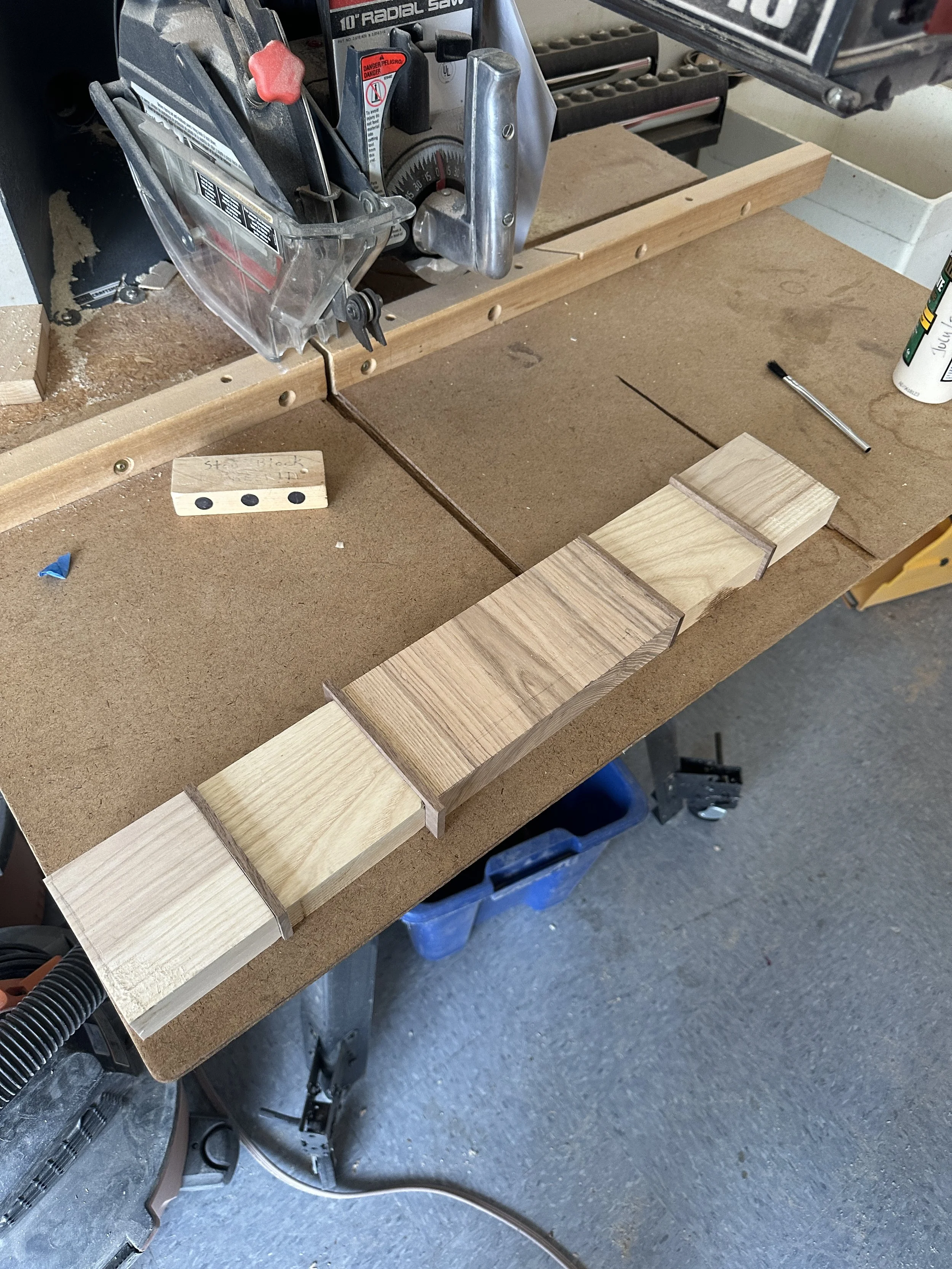
Because this was my first complete woodworking project, skill level and experience became clear limitations throughout the process. I was learning how to mill lumber, plan tolerances, and work with unfamiliar shop equipment, some of which was inconsistent and required adjusting dimensions and allowances during the build. These constraints led to design decisions that favored clarity and simplicity over complexity.
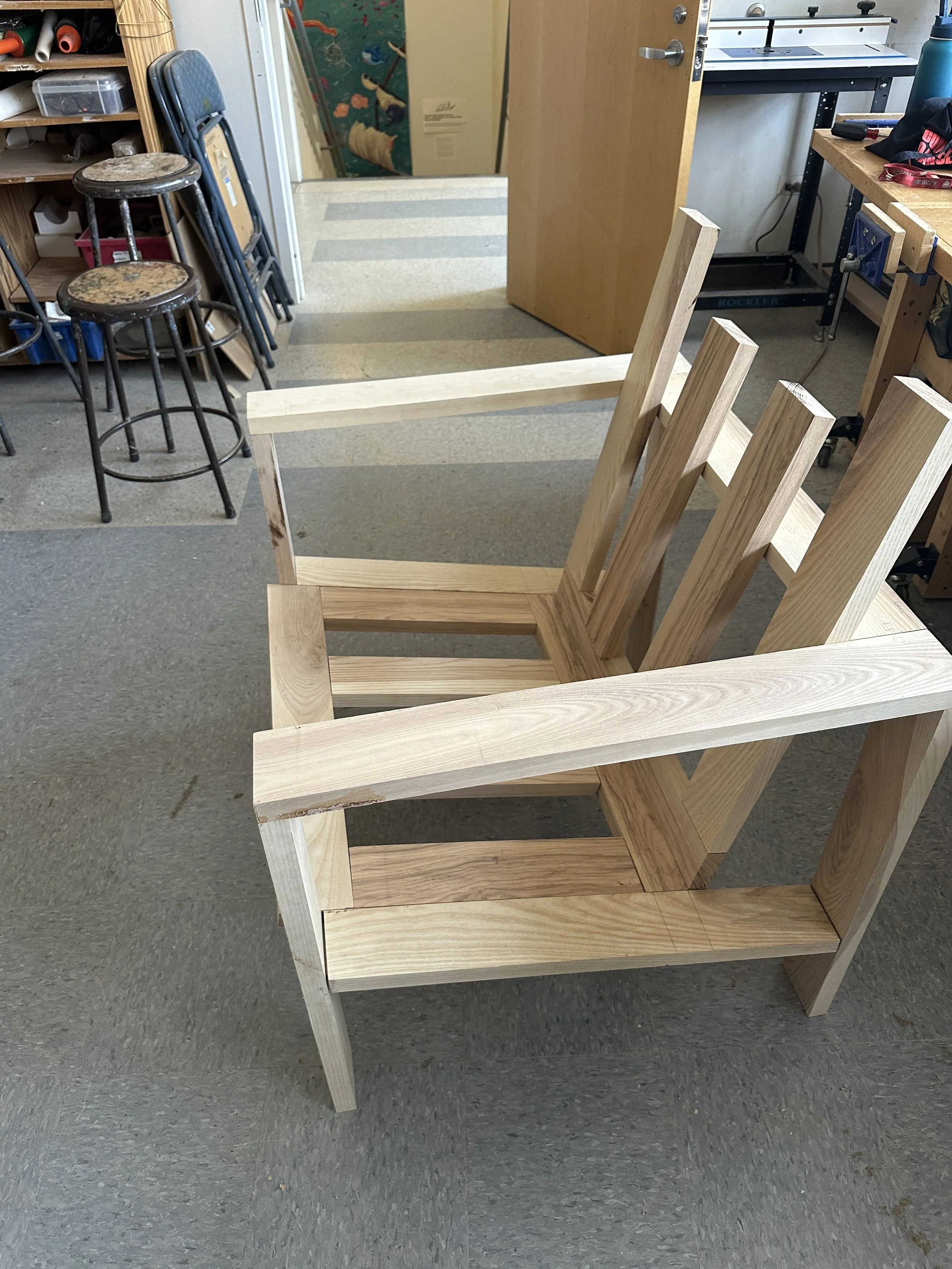
The form of the chair changed over time. Early versions included more profiled and curved components, but as the build progressed the design shifted toward a more blocky and straightforward structure. This made the chair easier to fabricate, improved structural reliability, and better matched the visual language of the reference pieces.
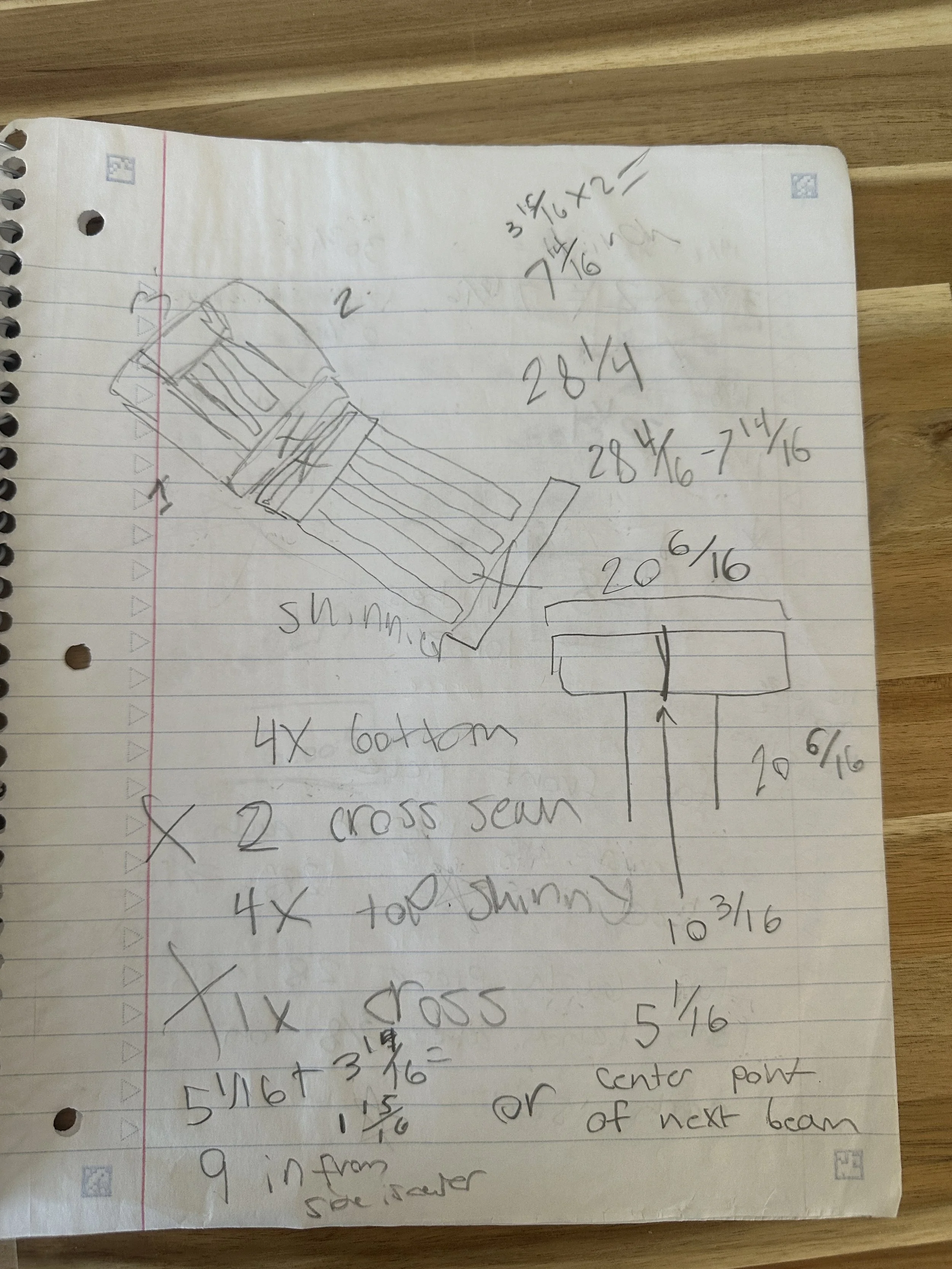
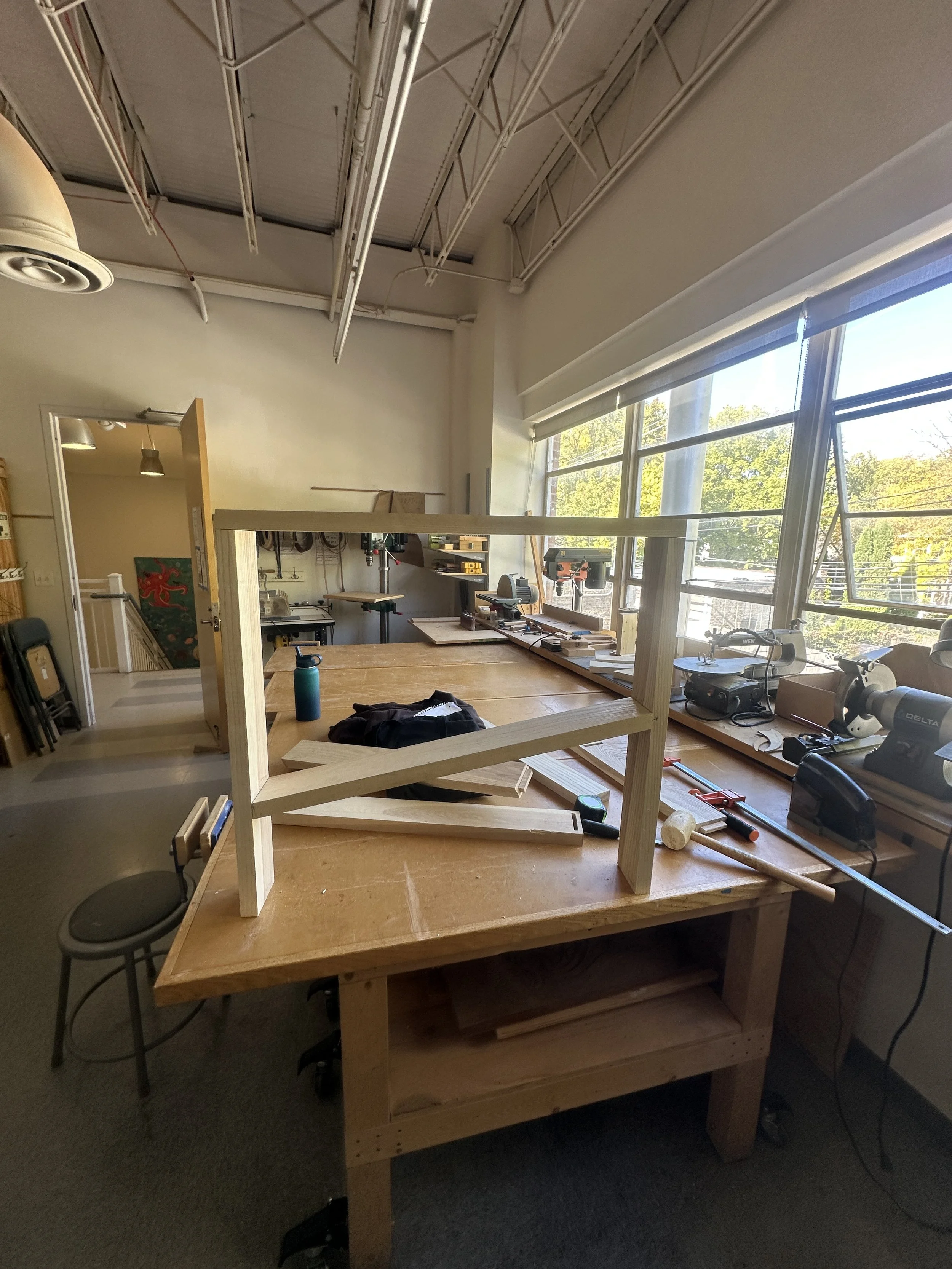
One unresolved question during development was the inclusion of a rear cross beam to support the back legs. This element was explored through sketches and physical reasoning to balance stability with visual weight. The final design reflects these considerations while maintaining a restrained, architectural presence.
Research & Inspiration
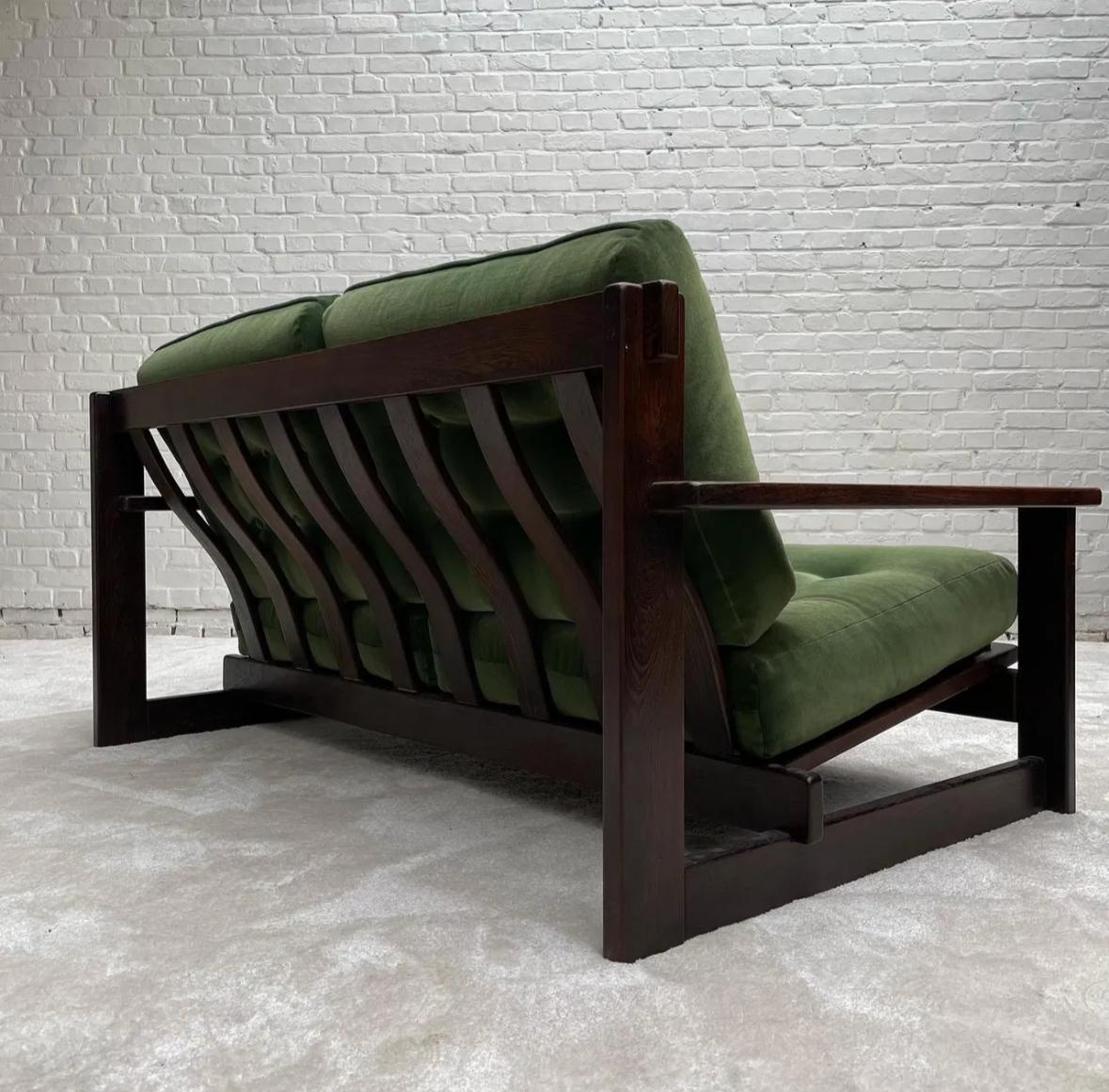
This project started by research into mid-century modern and late-modernist armchairs, particularly designs from the 1960s–1970s that emphasize solid wood construction, rectilinear forms, and visible mass. Many of the reference pieces use thick structural members and low, grounded proportions, creating a sense of permanence and architectural presence. These qualities strongly influenced the overall blocky geometry and visual weight of the chair.
Rather than directly replicating existing designs, my research focused on identifying shared principles such as simplified construction and restrained detailing. I intentionally avoided ornate shaping, curved profiles, or decorative joinery in order to maintain a quiet, aesthetic aligned with both brutalist and mid-century modern styling.
Also, I researched traditional woodworking joints to determine a construction method that aligned with the goal of the chair. Mortise and tenon joinery was selected due to its structural reliability, long history in furniture making, and ability to remain completely hidden within the form. This allowed the chair to appear simple, reinforcing the block-like character seen in the reference pieces.
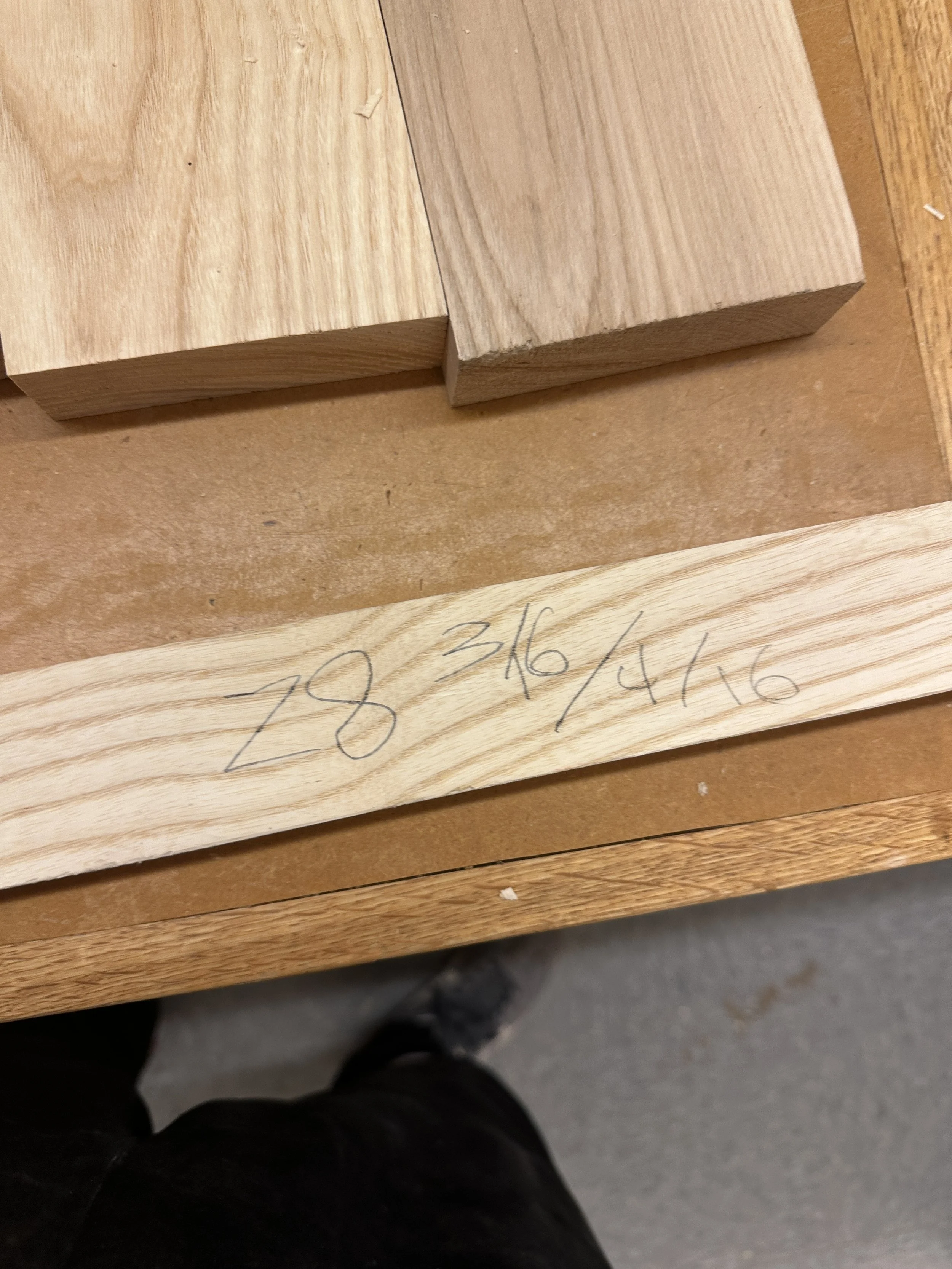
Material research also played a key role in the design. White Ashe was chosen for its durability and affordability relative to other hardwoods. Its straight grain and light tone support the chair’s clean geometry while allowing the structure itself to remain the focal point. During research, I found very few examples of white ash armchairs within this stylistic category, which further motivated the material choice as a way to explore less commonly used wood.